Over 20 years of construction and development, Can Tho City has achieved notable milestones, with its position and economic capacity significantly strengthened across many sectors.
On December 27, President Vo Van Thuong signed a decision awarding the First-Class Labor Order to the Party Committee, authorities, and people of Can Tho City in recognition of their outstanding achievements in socio-economic development, contributing to the cause of building socialism and safeguarding the Fatherland.
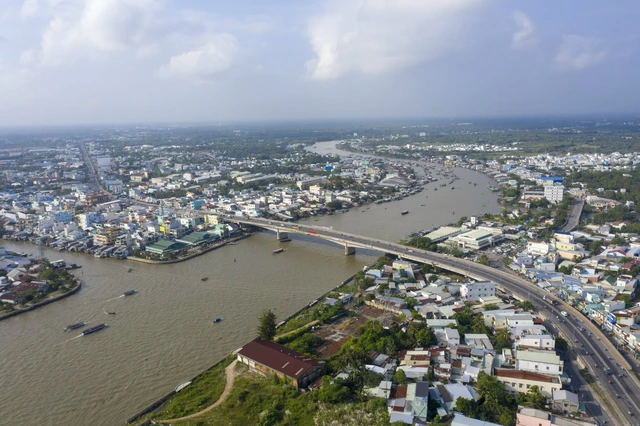
The Prime Minister has recently approved the Can Tho City Master Plan for the 2021–2030 period, with a vision to 2050.
During this time, Can Tho City is organizing a wide range of activities and events to celebrate the 20th anniversary of its establishment as a centrally governed city (January 1, 2004 – January 1, 2024).
Looking back to 2009, a milestone year for Can Tho, the city successfully achieved its first major goal in realizing its strategic vision and was officially recognized by the Prime Minister as a centrally governed Class I city.
During the 2020–2022 period, the Politburo issued Resolution No. 59-NQ/TW dated August 5, 2020, on the construction and development of Can Tho City to 2030, with a vision to 2045. The National Assembly also promulgated Resolution No. 45/2022/QH15 on piloting specific mechanisms and policies for the development of Can Tho City.
These important policy decisions have affirmed the Party’s viewpoint on the role, position, and importance of Can Tho City to the Mekong Delta region and the entire country. They have helped renew thinking and create unity in ideology and awareness throughout the political system, encouraged the people and business community, and formed a combined strength that paved the way for breakthroughs, key programs, new solutions, and the mobilization of both material and spiritual resources.
Over 20 years as a centrally governed city, Can Tho has maintained relatively strong economic growth. Gross regional domestic product (GRDP) during the 2004–2010 period grew at an average rate of 15.18% per year, while GRDP during the 2011–estimated 2023 period grew at an average rate of 5.64%. The scale of the economy has continued to expand, contributing approximately 1.2% of the national GDP annually and about 9.5% of the GRDP of the Mekong Delta region.
From 2004 to 2023, the city issued new business registrations to 22,445 enterprises of various types, with a total registered capital of VND 153.012 trillion. It also granted licenses to 125 new foreign direct investment (FDI) projects, with total registered investment capital of approximately USD 2.7 billion.
Can Tho City has paid close attention to cultural and social development, promoting social progress and equity while ensuring social welfare. The system of specialized hospitals, general hospitals, and medical centers has received significant investment. Social welfare policies have been effectively implemented, leading to a sharp reduction in the poverty rate. By 2023, the number of poor households is estimated to have decreased to 1,178, accounting for 0.32% of total households—the lowest rate in the Mekong Delta and significantly lower than the national average.