The Government’s recently issued action program on the development of Can Tho City identifies the development of socio-economic infrastructure, especially transport infrastructure, as a task of special importance for the city.
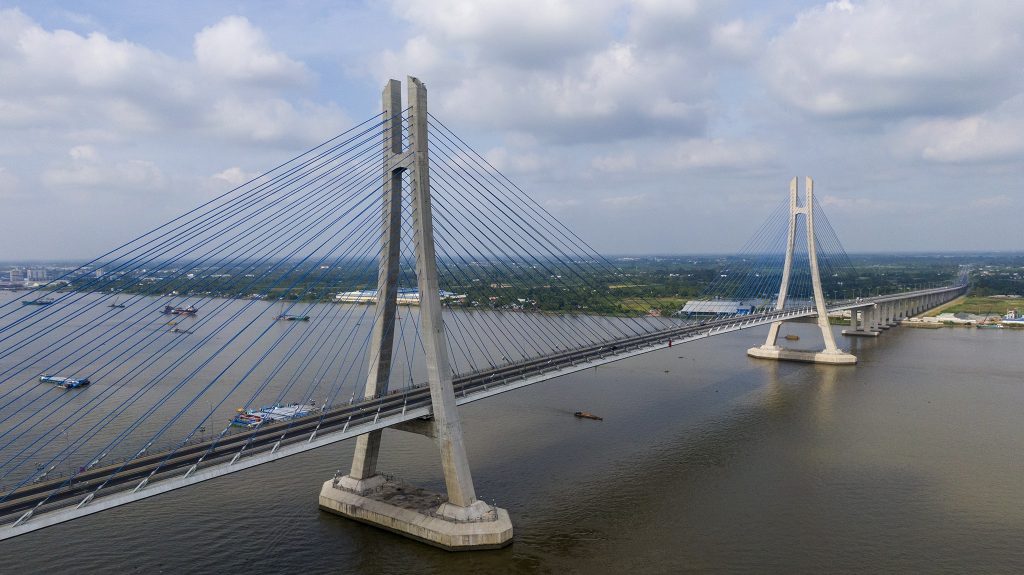
Developing transport infrastructure in Can Tho City and the Mekong Delta provinces is a key priority in the coming years.
Completing the transport network
On August 30, Prime Minister Pham Minh Chinh signed Resolution No. 98/NQ-CP promulgating the Government’s action program to implement Resolution No. 59-NQ/TW dated August 5, 2020 of the Politburo on the construction and development of Can Tho City to 2030, with a vision to 2045.
The issuance of the Government’s action program aims to concretize the objectives, tasks and solutions set out in Resolution No. 59, thereby effectively exploiting and promoting the potential and advantages of Can Tho City.
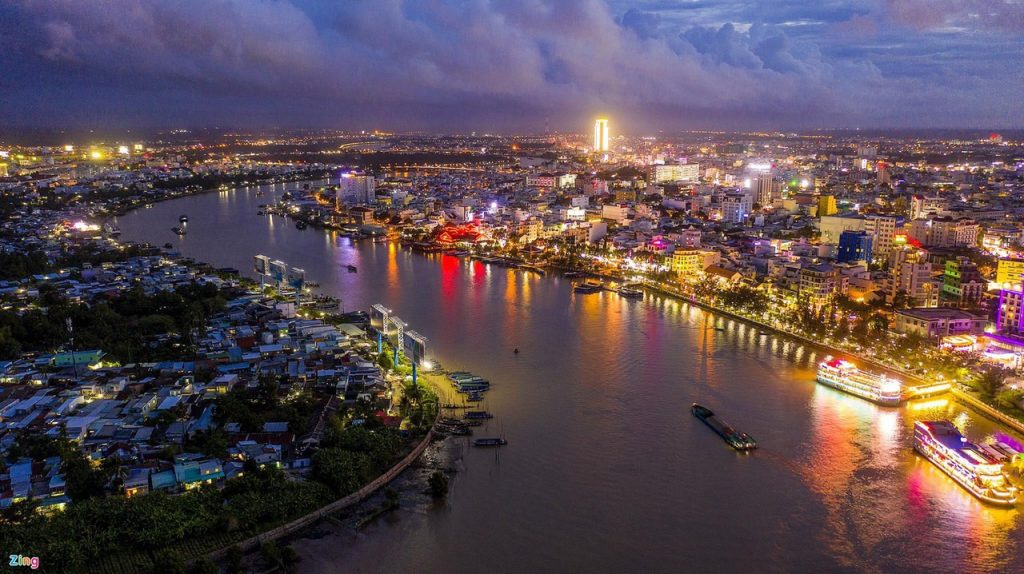
Can Tho City is regarded as the core urban center of the Mekong Delta region and will be prioritized for investment in socio-economic infrastructure, particularly transport infrastructure.
Accordingly, the Government’s action program sets out many important tasks and solutions focusing on the development of Can Tho City. Notably, these include solutions for developing socio-economic infrastructure for Can Tho and the entire Southwestern region, with particular emphasis on building a synchronized, modern transport infrastructure system that enhances regional and inter-regional connectivity.
Under the action program, the Government requires the completion of key transport projects connecting the Mekong Delta internally and with other regions, such as the My Thuan – Can Tho – Ca Mau expressway; the Soc Trang – Can Tho – Chau Doc routes; the Lo Te – Rach Soi route; My Thuan 2 Bridge; and Can Tho 2 Bridge.
Special attention is also given to studying the implementation of a railway line connecting Ho Chi Minh City with Can Tho and Ca Mau. At the same time, the city will gradually complete key urban transport routes, including the western ring road of Can Tho City connecting National Highway 91 and National Highway 61C; the road linking National Highway 91 with Giong Rieng District (Kien Giang Province); the upgrading and expansion of National Highway 91 (the Tra Noc – Binh Thuy section in Can Tho City); and the road connecting Vi Thanh City (Hau Giang Province) with Can Tho City via National Highway 61C.
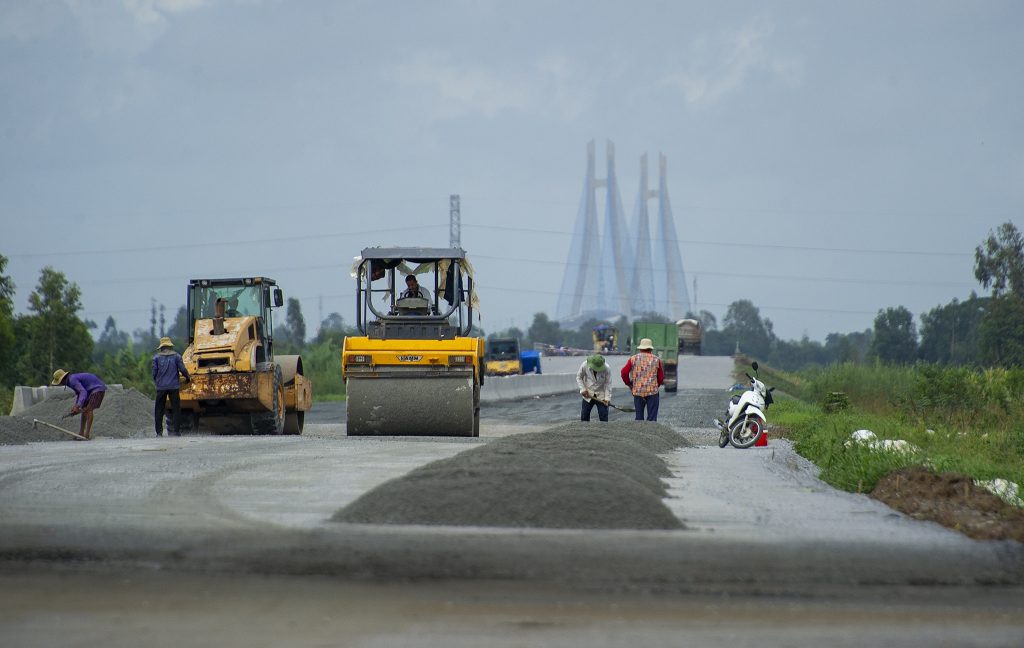
Many key transport routes in the Mekong Delta will be invested in and constructed in the coming period.
The Government’s action program also places special emphasis on the development of inland waterway and aviation transport in Can Tho and the Mekong Delta.
Specifically, the program sets a target to complete Phase 2 of the project to build navigation channels for large seagoing vessels entering the Hau River, allowing vessels of 10,000 tons fully loaded and 20,000 tons partially loaded to access ports in Can Tho City. It also aims to complete Phase 2 of the Cho Gao Canal upgrading project, study riverbank erosion, floodwater flows and saltwater intrusion on the Hau River as part of an overall regional assessment, and implement dredging and improvement of the Muong Khai – Doc Phu Hien Canal connecting the Tien River and the Hau River. In addition, projects to develop inland waterway transport corridors and logistics in the southern region will be implemented.
Alongside this, the Government will continue investing in the development of Cai Cui Port into an international seaport capable of accommodating large-tonnage vessels in line with the navigation channel for seagoing ships entering the Hau River. Research will also be conducted to upgrade Can Tho International Airport to meet development needs in accordance with the national master plan for airport and aviation system development for the 2021–2030 period, with a vision to 2050.
River-based, civilized and modern urban development
The Government’s action program also requires Can Tho City to study the establishment of new industrial zones along the southwestern transport axes of the city, in Thot Not District and the districts of Vinh Thanh, Co Do, Thoi Lai and Phong Dien. At the same time, the city must prepare the necessary infrastructure conditions and land reserves to attract social investment resources and effectively develop high-tech zones, information technology zones, the Vietnam–Korea Industrial Technology Incubator, and the Vietnam–Japan Friendship Industrial Park.
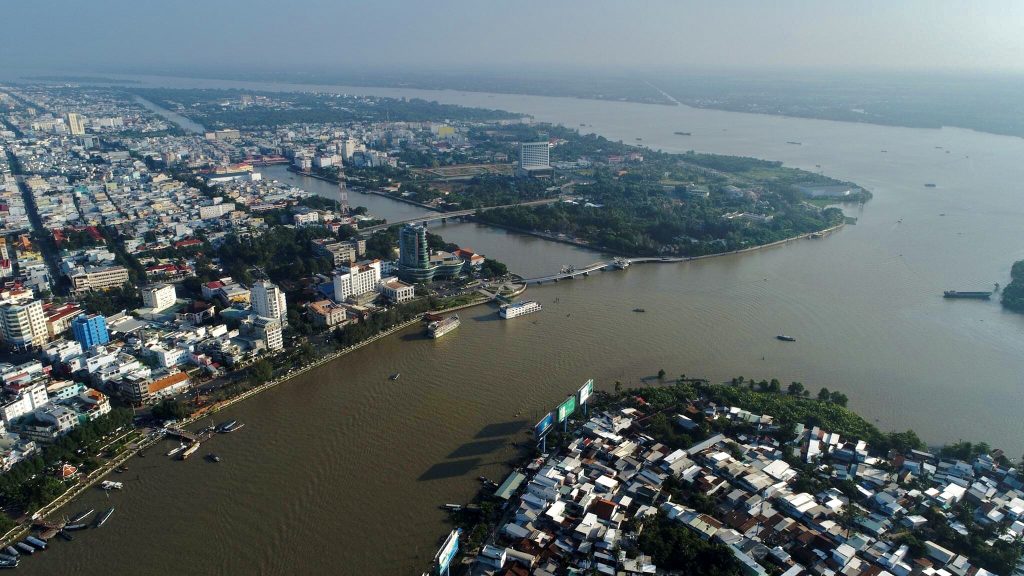
Can Tho City will adjust its general master plan toward a river-based, ecological, civilized and modern urban model, adapting to climate change and affirming its role as the core city of the Mekong Delta region.
The action program also assigns tasks for Can Tho City to formulate its master plan for the 2021–2030 period, with a vision to 2050, in accordance with planning laws, ensuring alignment with national-level planning and the Mekong Delta regional planning for the same period.
In parallel, the general master plan of Can Tho City will be adjusted toward a river-oriented, ecological, civilized and modern urban development model that adapts to climate change and reinforces its position as the core urban center of the Mekong Delta.
The city will develop satellite urban areas in the districts of Vinh Thanh, Co Do and Thoi Lai; an ecological urban area in Phong Dien District; a traditional urban area in Ninh Kieu District; and modern urban areas in the districts of Cai Rang, Binh Thuy and Thot Not. Pilot projects on smart urban development and urban governance models will be implemented in several districts during the 2021–2025 period and gradually expanded citywide after 2025.
Can Tho University will be upgraded to become a center for high-quality human resource training, scientific research and application for Can Tho City and the Mekong Delta region.
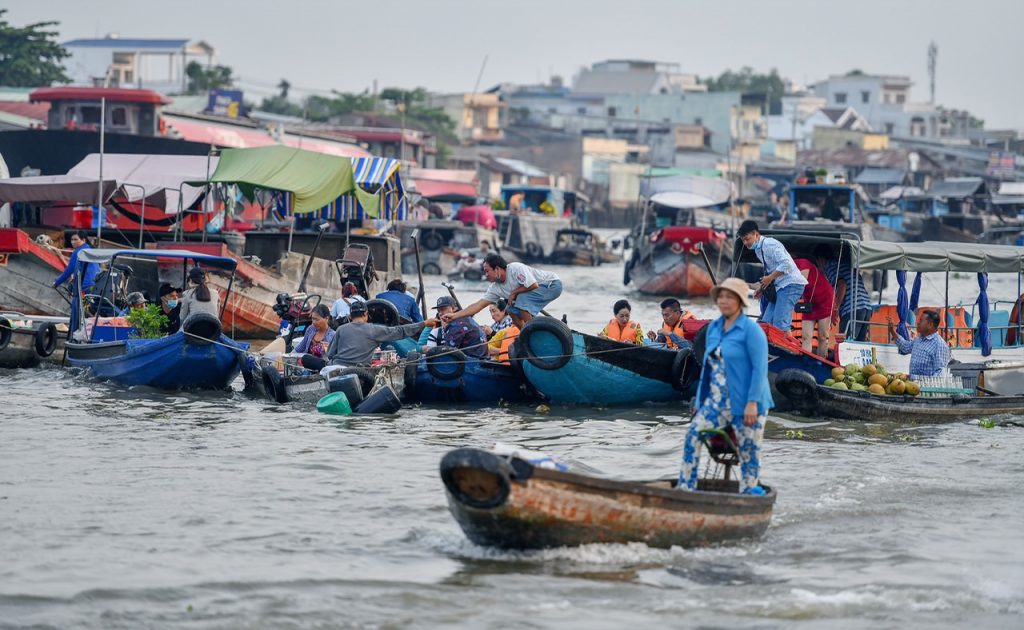
Ecotourism and river-based tourism will continue to be prioritized development directions for Can Tho City.
The Government’s action program also sets out a number of key development targets for Can Tho City. For the 2021–2025 period, the average annual GRDP growth rate is targeted at 7.5–8 percent. By 2025, GRDP per capita is expected to reach USD 6,200–6,800. The poverty rate is to be reduced to below 0.5 percent, and the proportion of trained workers is targeted at 80–85 percent.
For the 2026–2030 period, the average annual GRDP growth rate is targeted at 7–7.5 percent. By 2030, GRDP per capita is expected to reach USD 9,400–11,000. Health insurance coverage is targeted at 100 percent, the proportion of trained workers at 85–90 percent, and poverty is expected to be basically eliminated.