The Mekong Delta Regional Master Plan for the 2021–2030 period is a top-priority tool to guide and drive socio-economic development investment in the Mekong Delta, with transportation infrastructure identified as the number-one priority.
On November 3, Deputy Prime Minister Le Van Thanh, Chairman of the Mekong Delta Regional Coordination Council for the 2021–2025 period, chaired an online conference with several ministries, agencies, and the 13 provinces and cities of the Mekong Delta to gather feedback for finalizing the Mekong Delta Regional Master Plan for the 2021–2030 period, with a vision toward 2050. This is the first master plan among the six regional master plans nationwide.
Special priority given to key project groups
According to Tran Quoc Phuong, Deputy Minister of Planning and Investment, the Mekong Delta Regional Master Plan for the 2021–2030 period, with a vision to 2050, is of strategic significance to the development of the region in general and the 13 provinces and cities in particular. The Mekong Delta is a coastal region located in the lower Mekong River basin, accounting for about 20% of the national population and 12% of the country’s land area, contributing 15.4% of national GDP, 50% of rice output, and 95% of rice exports.
Recognizing both the potential and risks of the Mekong Delta, the Government issued Resolution No. 120/2017 on sustainable development of the Mekong Delta in response to climate change. The resolution assigned the task of developing the Mekong Delta Regional Master Plan for the 2021–2030 period, with a vision to 2050, using an integrated, multi-sectoral approach as stipulated by the Planning Law. At the same time, government agencies were tasked with mobilizing an additional USD 2 billion for the region to implement key, inter-regional projects with strong spillover effects, in order to realize the master plan and create new growth momentum for the Mekong Delta.
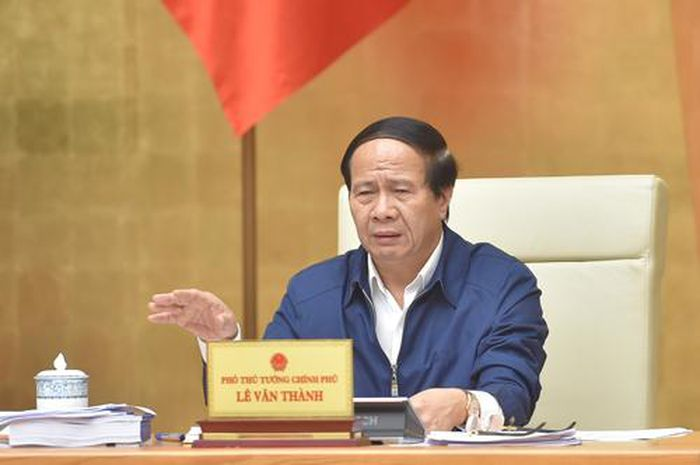
Deputy Prime Minister Le Van Thanh: “Top priority is given to transportation infrastructure development in the Mekong Delta.”
According to the draft master plan, development of the Mekong Delta is based on three pillars: economic, social, and environmental. Infrastructure development is considered the most important strategic component of the regional plan. During the 2021–2030 period, the region aims for economic growth of about 7% per year, in line with the national average. By 2030, agriculture, forestry, and fisheries are expected to account for about 20% of GDP; industry and construction about 32%; and services about 46%. Agricultural development will focus on a comprehensive bio-economy with three key sectors: fisheries, fruit cultivation, and rice.
Clarifying the region’s top concern—transportation infrastructure—Minister of Transport Nguyen Van The stated that special priority would be given to several project groups, including expressways from Ho Chi Minh City to Ca Mau; An Huu – Cao Lanh City – Vam Cong Bridge – Rach Gia; and Chau Doc – Can Tho – Tran De Port. Along with multiple expressways, the Mekong Delta will also see investment in seven national highways.
In terms of maritime development, the Ministry of Transport supports strong development of Long An International Port; supports Tra Vinh in developing the Tra Vinh Coastal General Port; and supports Ca Mau in calling for investment in Cau Vai Port. Meanwhile, Tran De Port in Soc Trang is also being promoted for investment. In aviation, Can Tho International Airport will be upgraded, and Phu Quoc International Airport will be expanded.
According to Tran Thanh Nam, Deputy Minister of Agriculture and Rural Development, the ministry is working with Mekong Delta localities to develop the region into a major, high-quality raw material area serving both domestic consumption and exports, such as high-quality rice-growing zones and aquaculture areas. The Ministry has also implemented numerous dredging and large canal expansion projects to store freshwater, including a project to renovate the main canal supplying freshwater from the Hau River to the Ca Mau Peninsula.
New master plan enables investment attraction
Concluding the conference, Deputy Prime Minister Le Van Thanh emphasized that master planning is the foremost tool to guide and drive development investment. Equally important is the implementation planning process, as ineffective execution would result in so-called “suspended” plans. He stressed: “Transportation infrastructure plays a particularly critical role in the socio-economic development of the Mekong Delta. Therefore, the number-one priority must be given to transportation infrastructure development. To develop the Mekong Delta, the first task localities must focus on is transportation infrastructure. This will also help strengthen regional connectivity and maximize the region’s role and strengths.”
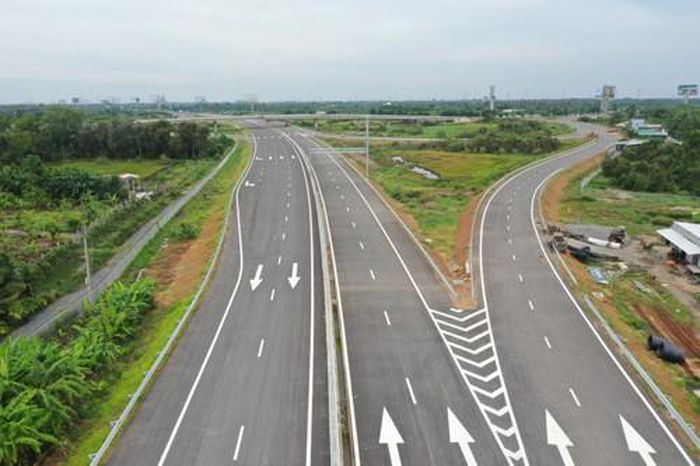
The Trung Luong – My Thuan Expressway project, part of the Mekong Delta expressway network, is nearing completion.
The Deputy Prime Minister cited Hai Phong City as an example, noting that 90% of its development investment capital comes from businesses and the public, with only 10% from the state budget. Drawing from Hai Phong’s experience, he suggested: “Mekong Delta localities need to focus on mobilizing private-sector capital for transportation infrastructure development. To attract businesses, this must be based on approved master plans, inviting them to conduct surveys, design projects, and develop investments under models such as public–private partnerships (PPP).”
He also noted that the establishment of growth poles should be closely linked to the development goal of Can Tho City as the regional center. In addition, regional development space should be connected to industrial hubs, with a focus on developing maritime space associated with the marine economy—initially prioritizing coastal road infrastructure, seaports, and logistics systems to tap the potential of coastal areas, as seven of the Mekong Delta’s 13 provinces and cities are coastal localities.
To ensure effective implementation of the master plan, the Deputy Prime Minister requested the Ministry of Planning and Investment to closely coordinate with ministries, sectors, localities, and experts to propose specific solutions, programs, and projects. This will also serve as a basis for guiding the formulation and implementation of local master plans in a unified and coordinated manner.
At the Deputy Prime Minister’s request, the Ministry of Planning and Investment is urgently finalizing reports and documents for submission to the Mekong Delta Regional Coordination Council for the 2021–2025 period, with appraisal scheduled for November 2021 and approval expected in December 2021.