As KITA Group expands into multiple sectors, the company faces the challenge of allocating resources and translating investment plans and opportunities into actual cash flow.
Golden Hills City Turns a New Page
On the afternoon of October 3, 2026, Trung Nam Group and KITA Group held a ceremony to restart the Golden Hills City project after more than a decade of stagnation. The event marked a new phase of development for the 335-hectare urban area in northwestern Da Nang, following the resolution of legal obstacles that had stalled the project.

An artist’s rendering of the Golden Hills ecological urban development in Da Nang.
Previously, on July 2, 2026, the Da Nang People’s Committee issued Decision No. 2923/QD-UBND, permitting the continued allocation and leasing of land for the Golden Hills City project. On July 7, the city approved an adjustment to the project’s investment policy, increasing its total investment from approximately VND 4.4 trillion to nearly VND 15.5 trillion.
Resolving the legal obstacles has paved the way for Golden Hills to resume development, but it does not guarantee investment efficiency. For a project spanning 335 hectares, the realization of its development plans still depends on the pace of infrastructure completion, the fulfillment of relevant obligations, and the ability to bring products to market.
Golden Hills is situated within Da Nang’s northwestern development corridor, which is supported by major infrastructure and economic drivers, including Lien Chieu Port, the Free Trade Zone (FTZ), the High-Tech Park, and the regional transport network. According to the announced development orientation, the project will follow a multifunctional ecological urban model incorporating residential areas, commercial and service facilities, education, healthcare, parks, and social infrastructure.
KITA Group positions Golden Hills as the core urban area of the Hai Van–Lien Chieu inter-ward area, providing residential spaces, commercial and service facilities, and social amenities for the city’s northwestern growth pole. This approach places the project within the broader context of the region’s economic and urban development.
If the growth drivers associated with seaports, logistics, technology, and trade materialize, demand for housing, services, and urban amenities could increase alongside the expansion of businesses and the workforce. This would provide a basis for Golden Hills to develop functions beyond residential use. However, planning potential can only translate into cash flow when actual demand emerges and the market is able to absorb the products.
The groundbreaking ceremony for Khoi Nguyen Kindergarten indicates that initial activities have resumed at Golden Hills. Nevertheless, the project’s success will ultimately depend on the progress of the entire urban development and its ability to attract residents, service providers, and economic activities to the area.
Speaking at the ceremony, Deputy Prime Minister Pham Gia Tuc emphasized: “Resolving difficulties and obstacles is not the ultimate destination.” The challenge is to move projects that have had their obstacles removed into actual implementation and generate tangible value for the economy.
For KITA Group, the message of “reviving the value of the land” reflects an approach centered on identifying opportunities arising from location, infrastructure connectivity, and regional growth drivers. However, turning potential into value will require the company to demonstrate its ability to organize investment, allocate capital, and bring projects into operation. Golden Hills is therefore a test of KITA Group’s capacity to transform a long-stalled project into a substantive phase of development.
The Resource Allocation Challenge
KITA Group’s presence in Da Nang extends beyond Golden Hills. On October 13, 2026, the city’s People’s Committee approved the investment policy for an infrastructure development and business project within Functional Area No. 6 of the Da Nang FTZ, while also approving FTZ KITA Trung Nam Co., Ltd. as the project investor.
Covering approximately 154 hectares, the project has a total investment of more than VND 3.354 trillion and an operating term of 70 years from the date the State decides to lease the land. Its objectives include developing and operating infrastructure, leasing land with completed technical infrastructure, and providing commercial and service facilities within the FTZ.

Kiều by KITA, located in the heart of Ho Chi Minh City.
Of the total investment, the investor’s equity contribution amounts to VND 800 billion, while the remaining VND 2.554 trillion is expected to be mobilized from credit institutions and other lawful sources. This capital structure makes financing arrangements a key factor to monitor as the project enters its implementation phase.
Unlike residential developments, which can generate cash flow through phased property sales, infrastructure investments require substantial upfront capital before stable revenue can be established. Operational efficiency also depends on the ability to attract secondary businesses to lease land, use the infrastructure, and occupy commercial and service facilities.
In other words, being selected as the investor resolves only the legal aspect of the project. Its actual performance will depend largely on the pace of infrastructure investment and the ability to attract businesses to establish operations within the FTZ.
Meanwhile, the Ocean Heart integrated coastal tourism, service, and entertainment complex, featuring the “7 Waves” concept and proposed by FTZ KITA Trung Nam Co., Ltd., has received initial positive feedback from Da Nang’s relevant departments at the planning concept stage.
The company said the “Ocean Seven – Danang” concept is structured around three interconnected layers: “5 Zones,” which define the spatial structure; “7 Waves,” which shape the narrative and flow of visitor experiences; and “Ocean Heart,” which creates the attraction and emotional climax. Its signature recurring program, “Seven Waves Awaken,” will feature a range of artistic performances combining music, lighting, musical fountains, lasers, projection mapping, and drones.
Nguyen Thi Anh Thi, Vice Chairwoman of the Da Nang People’s Committee, described the proposal as a good idea that could help create a new tourism product to support the development of the nighttime economy. The city has assigned the Department of Finance to coordinate guidance on investment research procedures, while requiring relevant agencies to review available land resources and coordinate the completion of the necessary documentation.
As Da Nang accelerates the development of its nighttime economy, creative industries, and new experiential tourism products, proposals such as Ocean Heart are expected to diversify the city’s tourism and service ecosystem. However, moving from a planning concept to an effectively operating project remains a process that requires resources, time, and validation by the market.
Pursuing multiple large-scale projects simultaneously in the same locality makes resource prioritization an increasingly important issue. Golden Hills requires resources to develop a multifunctional urban area; the FTZ project demands substantial infrastructure investment and long-term operational capabilities; while Ocean Heart requires further clarification of its development plans. Each initiative has distinct requirements in terms of capital, legal procedures, implementation timelines, and market conditions.
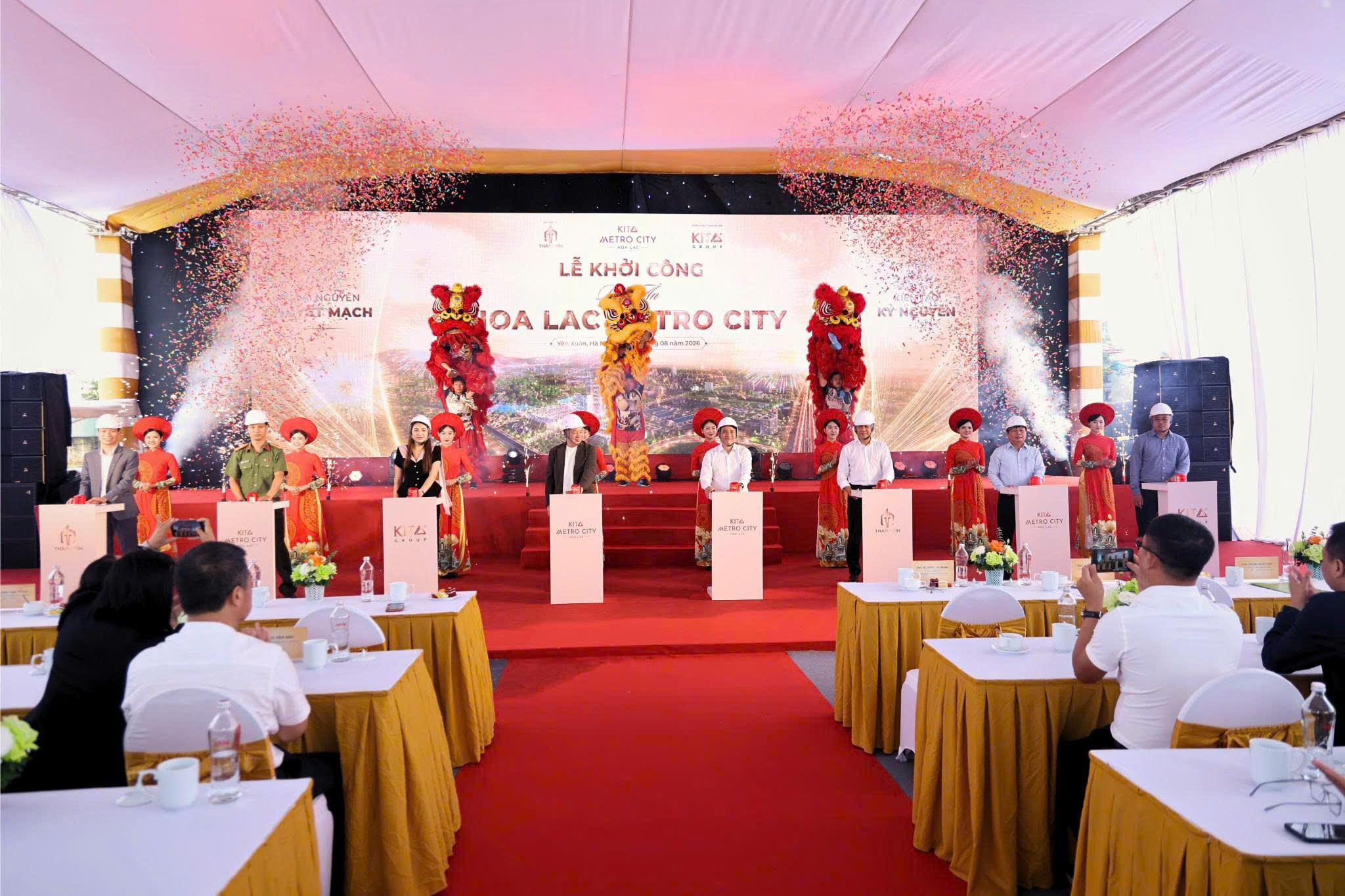
KITA Group’s portfolio also extends beyond Da Nang. In Hanoi, alongside GIA by KITA in Ciputra, the group broke ground on Hoa Lac Metro City, an 8.3-hectare project in Yen Xuan Commune, on August 24, 2026. The development is aligned with the urban growth strategy surrounding Metro Lines 5 and 12, within the Hoa Lac area being planned as a western hub for science, technology, and education in the capital.

ANSANA by KITA is located along Vo Van Kiet Boulevard, a major transport artery driving development in western Ho Chi Minh City.
In Ho Chi Minh City and Can Tho, the group’s portfolio also includes projects such as ANSANA by KITA, Kiều by KITA, and KITA Airport City. These markets and projects differ in location, customer segments, development timelines, and market absorption conditions. This requires the company to adopt an approach tailored to each project rather than applying a one-size-fits-all development strategy.
Beyond real estate, KITA Group is expanding into the electric commercial vehicle segment. On June 17, 2026, the group and Chery Commercial Vehicle Bozhou signed their first order, following a strategic cooperation agreement in 2025 and a product distribution agreement for the Vietnamese market in May 2026.
Simultaneous expansion into urban real estate, FTZ infrastructure, and electric commercial vehicles offers KITA Group additional growth opportunities, but also places greater demands on resource management and execution. Ultimately, KITA’s greatest challenge lies in its ability to turn investment opportunities into tangible business results.