In Da Nang’s development strategy, growth potential comes not only from new investment capital, but also from the ability to unlock existing resources, reactivate stalled projects, and transform untapped potential into new drivers of growth.
From its involvement in the revival of Golden Hills to expanding investments in the Free Trade Zone and pursuing cooperation in the cultural industries sector, KITA Group’s strategic moves in 2026 reflect an increasingly close alignment with the city’s long-term development priorities. These efforts are gradually laying the foundation for the Group to pursue its ambition of becoming a strategic investor in Da Nang.
Unlocking Resources and Revitalizing Value from Stalled Projects
In urban development, attracting new investment capital is only one part of the growth equation. Unlocking land resources and bringing stalled projects back on track are equally important, particularly when investment resources have already been allocated but remain underutilized.
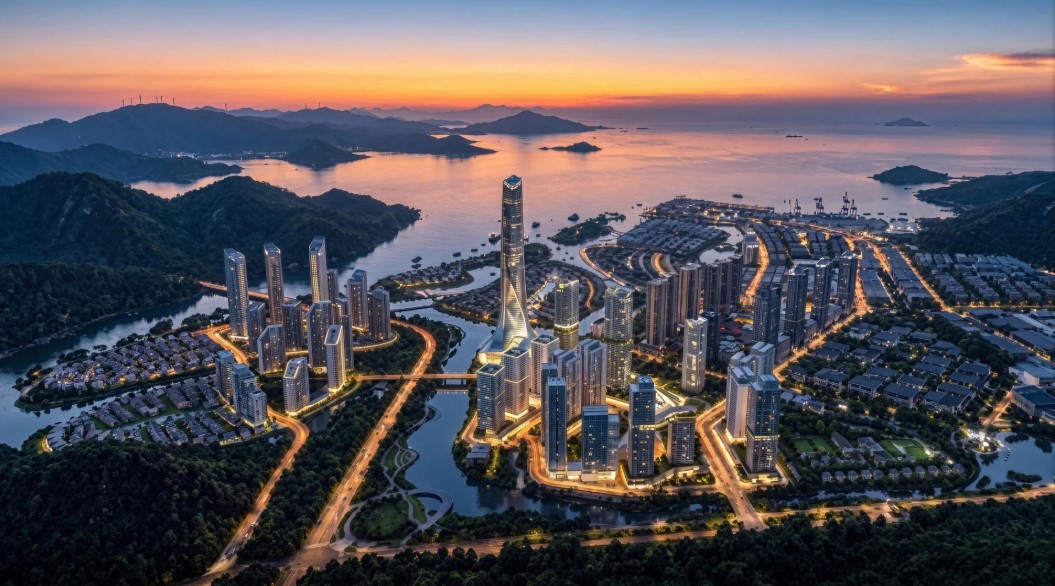
In Da Nang, the Golden Hills Eco-Urban Area Project (commercially known as KITA Danera Bay) is a notable example. After more than a decade of stagnation, the approximately 335-hectare land bank in the city’s northwestern area recorded significant legal progress in 2026.
In July 2026, the Da Nang People’s Committee issued decisions allowing the continued allocation and leasing of land, while approving adjustments to the project’s investment policy. On October 3, the Golden Hills Eco-Urban Area Project was officially relaunched, with KITA Group participating as the project developer.

The relaunch ceremony of the Golden Hills Eco-Urban Area Project on October 3, 2026.
For KITA Group, Golden Hills is not an isolated investment move, but rather a continuation of its “Revitalizing Land Potential” journey – an investment approach centered on identifying, unlocking, and regenerating value from land resources that have yet to be utilized effectively.
Behind this strategic choice lies an investment challenge that requires more than financial strength: the ability to recognize a project’s long-term value, mobilize and organize resources, and navigate complex requirements throughout the implementation process. These are also the factors that have shaped KITA Group’s approach to acquiring and developing projects that have experienced prolonged periods of stagnation.
From this perspective, Golden Hills not only adds another project to the Group’s investment portfolio but also extends KITA Group’s “Revitalizing Land Potential” journey, gradually transforming underutilized resources into new development opportunities in Da Nang.
Expanding Investment Horizons and Exploring New Growth Sectors
While the Golden Hills Eco-Urban Area Project addresses the challenge of unlocking urban resources, KITA Group’s progress in the Da Nang Free Trade Zone (FTZ) demonstrates a notable expansion in the scope of its investments in the city.
On October 13, 2026, the Da Nang People’s Committee approved the investment policy and designated FTZ KITA Trung Nam Co., Ltd. as the investor of a project to develop and operate infrastructure for a functional zone at Location No. 6 within the Da Nang Free Trade Zone. Covering approximately 154 hectares, the project has a total investment capital of more than VND 3.354 trillion and is oriented toward developing infrastructure and commercial and service facilities.
For KITA Group, participation in the Free Trade Zone project therefore represents more than an expansion of its investment portfolio. The Group is entering a sector where value is generated not only through the development of physical assets, but also through the ability to organize operations, connect markets, and stimulate economic activities on the foundation of well-invested infrastructure.
This combination helps expand KITA Group’s role beyond urban development into participation in infrastructure components that are closely linked to Da Nang’s long-term growth drivers.
Diversifying Cooperation Areas Toward Long-Term Value Creation
Beyond real estate and commercial infrastructure, KITA Group is continuing to broaden its cooperation into the cultural industries and night-time economy – sectors closely aligned with the local government’s goal of diversifying economic growth drivers.

In 2026, KITA Group signed a Memorandum of Understanding with the Da Nang People’s Committee on cooperation in developing the cultural industries in association with the night-time economy.
Engagement in this sector reflects the Group’s expanding investment perspective, extending beyond infrastructure development to exploring opportunities in activities capable of enhancing urban vibrancy, stimulating consumption, and strengthening the appeal of the destination.
Translating cultural cooperation into specific business models will require a clear roadmap and practical implementation. Nevertheless, this broader scope of cooperation demonstrates that KITA Group views Da Nang not merely as a real estate market, but as an investment destination offering considerable potential for economic and service-sector development.
Overall, KITA Group’s developments in 2026 reflect an investment strategy built on continuity and expansion: unlocking resources as its foundation, developing economic infrastructure as a new direction, and gradually entering sectors capable of generating long-term value.
According to Dân Trí Online Newspaper